How to Switch Payroll Providers Mid-Year
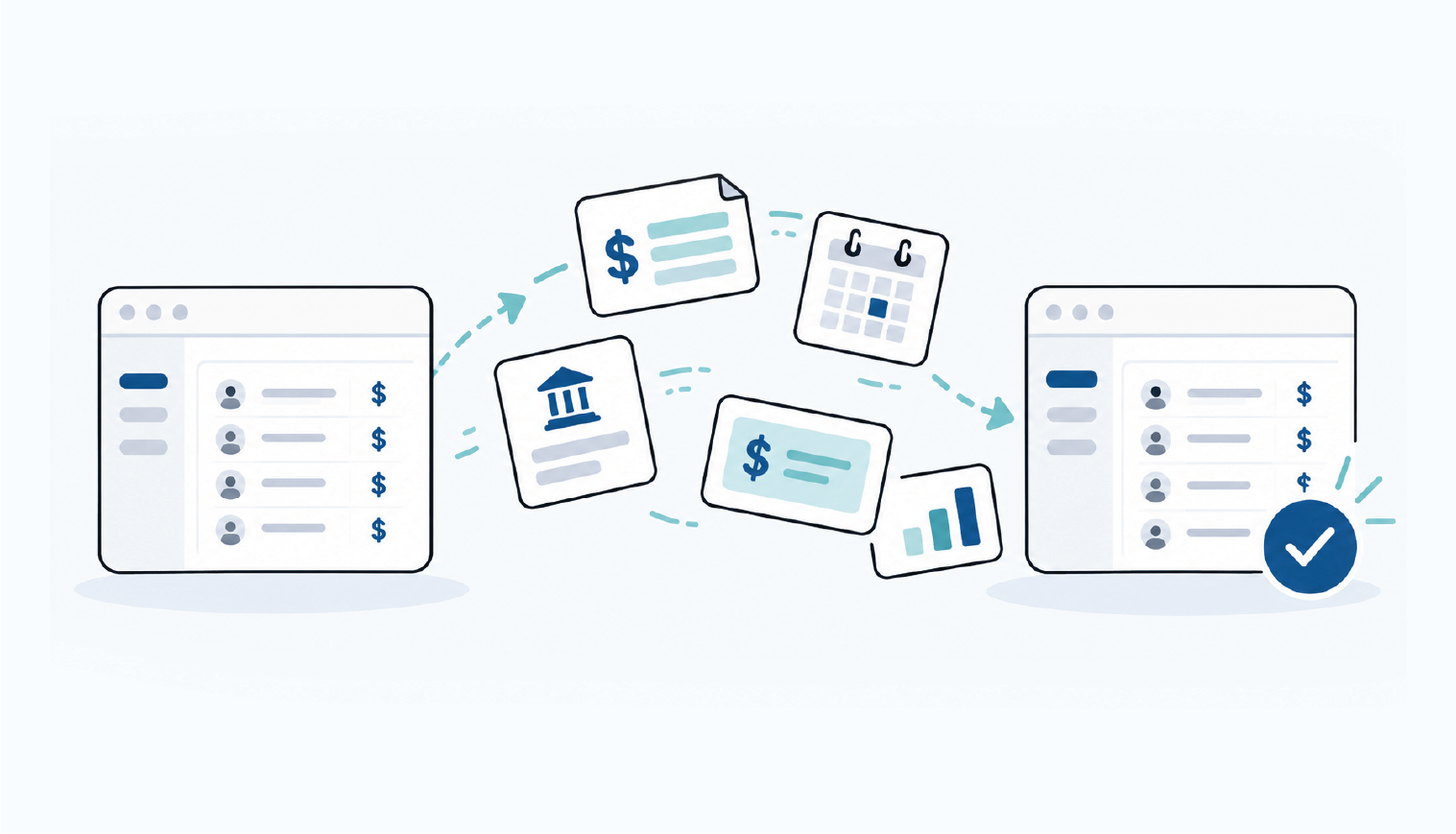
Staying with the wrong payroll provider can create more risk than switching.
When payroll issues keep happening and support is difficult to reach, many businesses assume they have to wait until January to make a change.
They don't.
You can switch payroll providers mid-year. The important part is making sure employee data, payroll history and year-to-date balances transfer correctly.
A good payroll transition should also include validation before the first live payroll.
At PayFWDs, one of the most common reasons we see companies switch is simple: they have problems with their current provider and aren't getting the support needed to resolve them.
If that sounds familiar, here's what to expect when changing payroll providers mid-year.
Can You Switch Payroll Providers Mid-Year?
Yes. Businesses can switch payroll providers at any point during the year.
January seems like the easiest time because a new calendar year creates a clean reporting period. But waiting until January isn't always necessary.
A mid-year payroll conversion requires your new provider to account for payroll already processed during the year.
That includes information like:
Year-to-date wages
Payroll taxes
Employee deductions
Payroll history
Employee information
Direct deposit details
The goal is to continue payroll without losing the history behind it.
When that information is transferred and validated correctly, employees should continue getting paid as expected.
Why Businesses Switch Payroll Providers
Most businesses don't change payroll companies because they want another software platform.
They switch because something isn't working.
Poor service is one of the most common reasons companies come to PayFWDs.
A payroll problem may already be frustrating. Waiting days for an answer, repeating the issue to several representatives or working through a ticket queue can make it worse.
Other reasons businesses may decide to switch include:
Recurring payroll errors
Unresolved payroll tax issues
Slow customer support
Reporting limitations
Changing workforce needs
Poor communication
Lack of confidence in their current provider
Payroll affects your employees, taxes and financial records.
When something goes wrong, having someone who understands your account matters.
What Happens During a Payroll Migration?
A payroll migration is the process of moving payroll operations from one provider to another.
The process involves more than transferring employee names and pay rates.
Your new payroll partner needs to understand what has already happened during the year. That means gathering payroll history, year-to-date balances and employee information.
The new payroll setup must then be configured and checked before going live.
A typical payroll transition includes:
Gathering employee and company payroll data.
Transferring historical and year-to-date information.
Configuring earnings, deductions, taxes and other payroll settings.
Validating the transferred information.
Testing payroll before the first live run.
Resolving any discrepancies before employees are affected.
The exact process will vary based on payroll complexity.
What shouldn't vary is the attention given to validation.
A Common Payroll Migration Mistake We See at PayFWDs

“One of the biggest mistakes companies make is underestimating the importance of validating historical payroll data. A small error in a year-to-date tax balance or deduction can affect employee pay, tax calculations and year-end forms. It’s much easier to catch those issues before the first live payroll than after employees have been paid.”
What Happens to Payroll Taxes When You Switch Providers?
Payroll taxes are one of the most important parts of a mid-year conversion. There are two things your new payroll provider needs to get right:
1. Transfer your year-to-date payroll and tax information.
Your new provider needs a complete record of wages and taxes already processed that year. This information carries your payroll history into the new system.
2. Validate that the transferred information is accurate.
Moving the data is only part of the process. Your new provider should also check year-to-date balances before your first live payroll.
A number appearing in the new system doesn't automatically mean it's correct. Before switching, ask who will validate your historical payroll and tax information.
Who Issues W-2s If You Switch Payroll Providers?
Year-end reporting should be discussed before your payroll conversion begins.
When switching to PayFWDs during the year, PayFWDs will inherit W-2 preparation for that year. Your prior payroll history will be incorporated into the new system so year-end forms reflect the full year.
This is another reason accurate year-to-date data matters. If wage or tax balances are incorrect during implementation, those differences can carry into year-end reporting.
Before your conversion, confirm how prior payroll data will be transferred and reviewed. This helps ensure your year-end reporting and W-2s are accurate.
This keeps almost all of the original passage intact, while replacing the ambiguity the reviewer flagged. It also reinforces PayFWDs’ implementation expertise without making the section feel promotional.
What Information Will Your New Payroll Provider Need?
The exact information needed depends on your business and payroll setup. Most payroll conversions require some combination of employee records, payroll history and year-to-date information.
Information Needed When Switching Payroll Providers
Providing clean information early can make implementation much easier. But providing the information is only the first step. Your new provider should also explain how that information will be reviewed.
What a Successful Payroll Transition Looks Like
A successful payroll transition starts well before the first live payroll.
In one transition PayFWDs managed, the client provided clean employee and payroll data early. Our team validated the information, reviewed payroll-specific configurations and ran a test payroll.
That process helped identify discrepancies before employees were affected.
As Rachel Dieruf explains:
“We treated the implementation as a shared project, not just a software conversion. The client provided clean employee and payroll data early, and we validated the information, reviewed payroll-specific configurations and ran a test payroll before the first live run. The transition was successful because of communication, preparation and reconciliation. There were no go-live surprises because the details had already been tested and confirmed.”
The takeaway is simple. A smooth payroll transition depends on more than software. Testing, communication and careful validation can help prevent surprises when the first payroll goes live.
Why a Test Payroll Matters
A test payroll gives your team another chance to identify problems before going live.
The basic idea is straightforward. Payroll calculations are tested and compared before the new system becomes the live payroll process. Differences can then be investigated before employees receive their checks.
For a mid-year payroll transition, this can be especially useful because historical balances and new payroll settings are coming together for the first time. It creates another checkpoint between implementation and your employees' paychecks.
Questions to Ask Before Switching Payroll Providers
A payroll demo can show you what the software looks like. Implementation questions tell you what switching will actually feel like.
Before choosing a new payroll partner, ask:
Who owns the data migration?
How will historical payroll data be validated?
How will year-to-date information be checked?
Will a test payroll be run?
Who will support us during our first live payroll?
How will payroll taxes be handled?
Who will handle year-end reporting?
These questions help you understand the process behind the platform.
Payroll Provider Switching at a Glance
Frequently Asked Questions
-
Yes. Businesses can change payroll providers during the year. A mid-year switch requires accurate payroll history and year-to-date information.
-
It depends on the complexity of your payroll. The process becomes easier when responsibilities are clear and data is provided early. Your new payroll partner should guide the implementation and validation process.
-
That can depend on how the payroll transition is structured. Confirm who will prepare W-2s and how prior payroll history will be handled before implementation begins.
-
Businesses typically need employee data, payroll history and year-to-date wage and tax information. Deduction, direct deposit and company payroll settings may also be required.
-
There isn't one timeline that applies to every business. Employee count, payroll complexity and historical data can affect implementation. Your new provider should give you a clear timeline based on your payroll setup.
-
A well-managed transition is designed to avoid interruptions. Careful data validation and payroll testing can help identify issues before the first live payroll. Running a test payroll can provide another layer of review.
Switching Payroll Providers Doesn't Have to Be Complicated
The hardest part of changing payroll providers isn't choosing new software. It's making sure the information behind your payroll is accurate.
Historical payroll data needs to be transferred correctly. Year-to-date balances need to be validated. Payroll settings need to be tested. Someone also needs to be available when the first payroll goes live.
A well-managed implementation can prevent small setup issues from becoming incorrect paychecks, tax problems or stressful last-minute fixes. If you're considering a change, start by understanding what your transition will require.
If you'd rather talk through your current payroll situation first, talk to someone at PayFWDs.